
Learning About-Problem Solving.
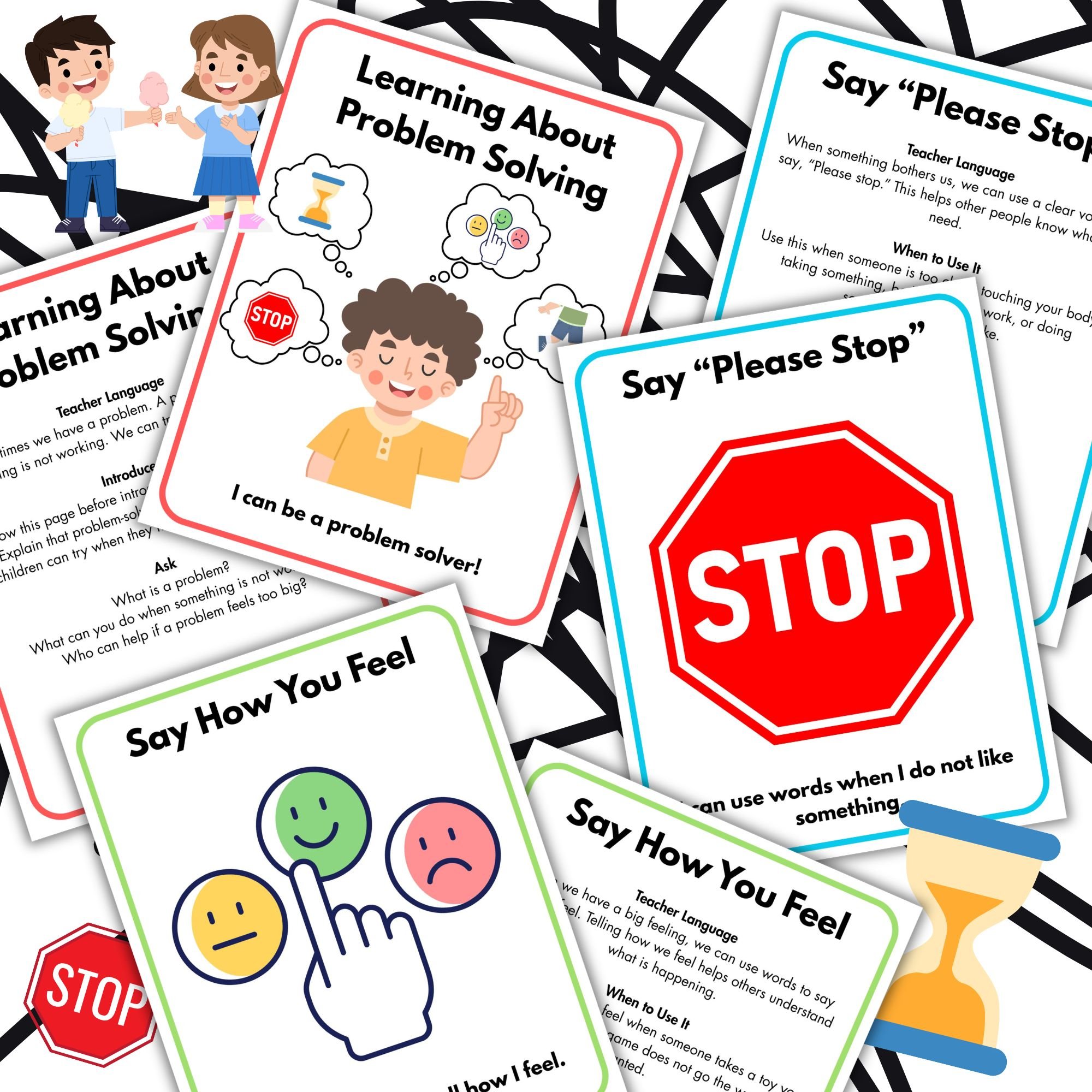
Learning About-Problem Solving.
Quick Answer
Learning About Problem Solving is a social-emotional introduction resource designed to help children learn simple strategies for solving common preschool problems. Each strategy is introduced through a child-friendly visual, simple language, teacher prompts, real-life classroom examples, and words children can try when they need help solving a problem.
Description
Learning About Problem Solving is part of the Preschool Vibes Learning About series. This series is designed to introduce important early learning concepts through simple visuals, teacher-friendly language, and quick discussion prompts that can be used during large group, small group, morning meeting, or classroom review.
In this resource, children are introduced to practical problem-solving strategies they can use during everyday preschool situations. The goal is not to create a long scripted lesson, but to give teachers a simple way to help children understand what the strategy means, when they might use it, and what words they can try.
Each strategy includes a student-facing visual page and a matching teacher prompt page. Together, these pages help children build problem-solving language, practice safe choices, and feel more confident handling common classroom conflicts with adult support.
What’s Inside
This resource includes problem-solving strategy pages for:
Say Please Stop
Say How You Feel
Play Together
Walk Away
Share
Apologize
Ask
Be Patient
Take Deep Breaths
Use a Timer
Use Kind Words
Play With a New Friend
Get Help from a Grown-up
Each problem-solving strategy includes two pages:
Page 1: Strategy Visual
Each student-facing page includes:
Strategy name
Large child-friendly visual
Simple child-facing sentence
Page 2: Strategy Introduction & Meaning
Each teacher prompt page includes:
Teacher Language
When to Use It
Words to Try
Ask
This resource also includes a How to Use page with simple printing and teaching tips.
How to Use
Use these pages during large group, small group, morning meeting, social-emotional lessons, calm-down conversations, or quick classroom problem-solving practice.
Show the visual page first so children can see the strategy, hear the name, and connect it to a simple child-friendly sentence. Then use the teacher prompt page to talk through when to use the strategy, what children can say, and how the strategy can help.
Display both pages together or print them back to back. You can use one strategy at a time for focused instruction, revisit strategies as problems come up, or keep the pages near your large group area, calm-down space, social-emotional materials, or small group area for quick review.
Why It Works
Learning About Problem Solving helps children practice problem-solving before they are in the middle of a hard moment.
Instead of only responding after a conflict happens, this resource gives children simple language and familiar strategies they can return to again and again. The visuals, examples, and words to try help make abstract social-emotional skills more concrete and easier for young children to understand.
This resource helps:
Build problem-solving language and confidence
Give children simple words to use during common classroom conflicts
Support emotional expression and self-advocacy
Encourage cooperation, repair, and flexible thinking
Help children practice strategies before problems happen
Encourage children to try safe problem-solving choices
Give adults simple teaching prompts without needing a scripted lesson
Perfect For
Preschool
Pre-K
Kindergarten readiness
Social-emotional learning
Problem-solving lessons
Morning meeting
Large and small group instruction
Calm-down areas
Friendship and conflict-resolution practice
Classroom behavior support
Homeschool preschool
Please Note
This is a digital download only. No physical product will be delivered.
Preschool Vibes Standards
1D. We can try more than one strategy when something does not work.
2B. We can express feelings in appropriate ways.
2G. We can solve conflicts with words and support.
3G. We can use language during play to negotiate roles, solve problems, and collaborate.