
Gingerbread Investigation
Gingerbread Investigation
Quick Answer
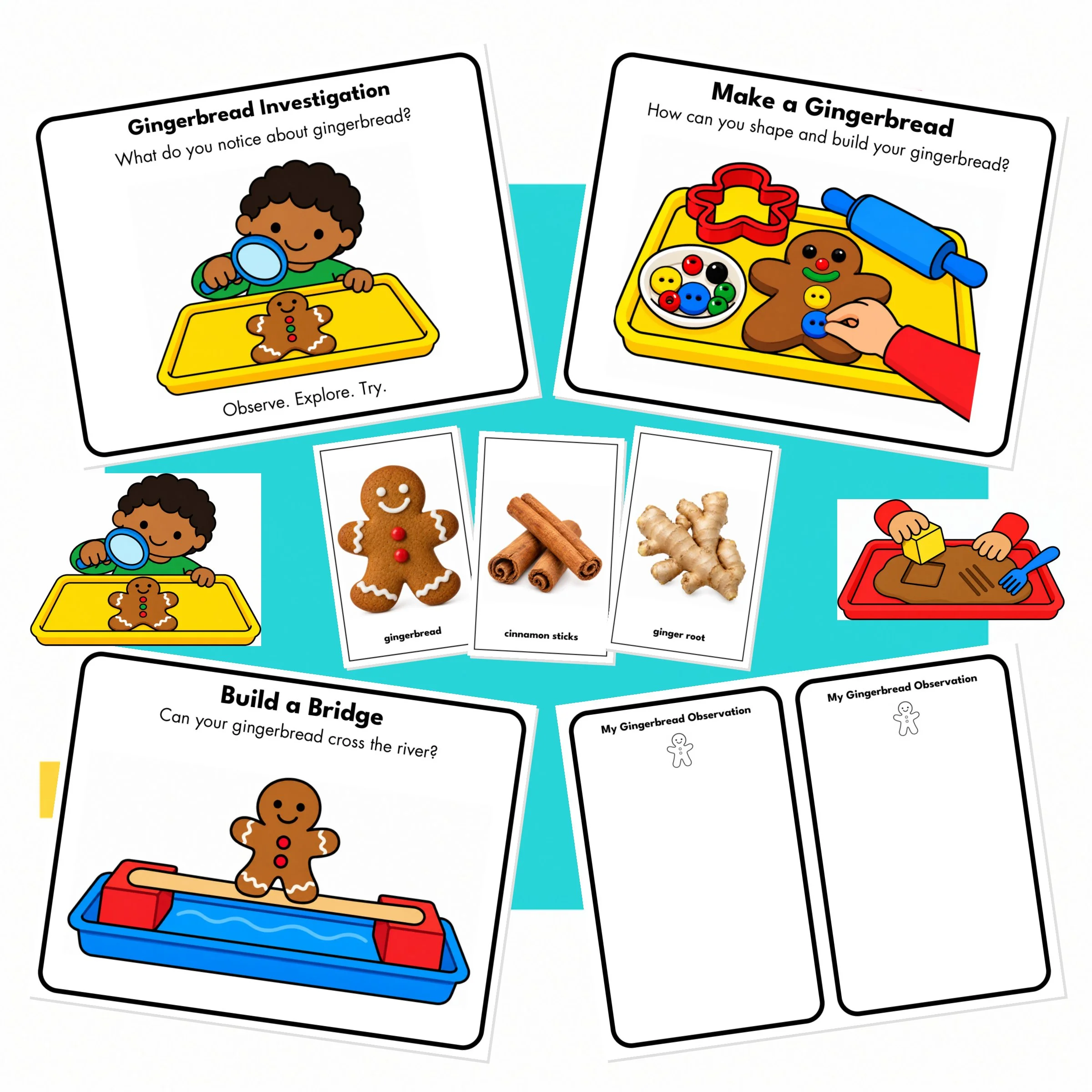
Bring hands-on gingerbread science to your preschool science center with six investigations that invite children to observe cookies, compare changes, build a bridge, and explore playdough. Pair the printable signs with real materials for activities children can revisit and try in different ways.
What’s Included
25-page printable PDF
Gingerbread Investigation display
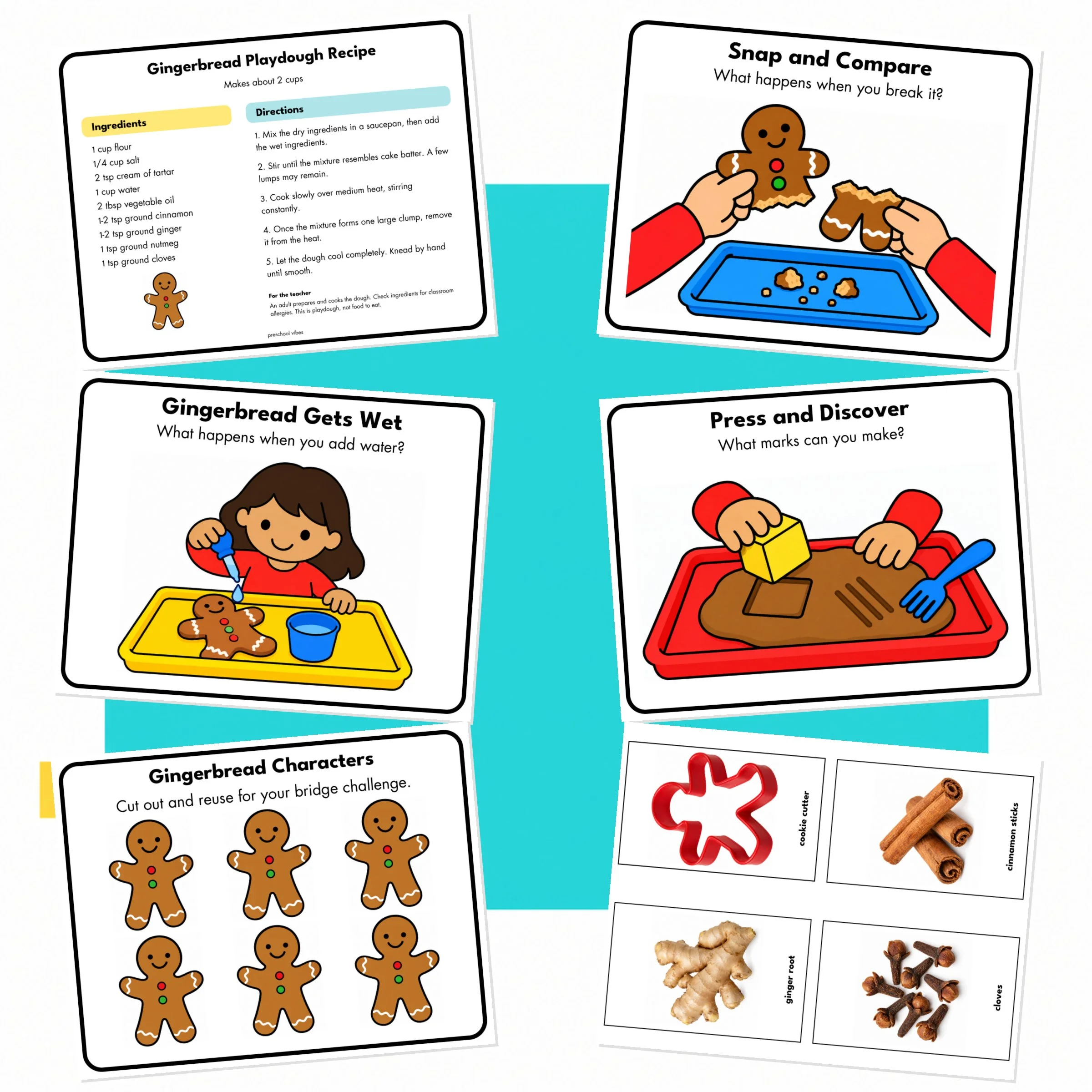
Six investigation signs in full-page and half-page sizes: Look Closely, Snap and Compare, Gingerbread Gets Wet, Build a Bridge, Press and Discover, and Make a Gingerbread
12 picture word cards in two sizes: gingerbread, whole, broken, crumbs, dry, wet, cinnamon sticks, ginger root, cloves, gingerbread playdough, rolling pin, and cookie cutter
No Water and Water Added tray labels
Six reusable gingerbread characters for bridge testing
Half-page My Gingerbread Observation drawing sheets
Full-page gingerbread playdough recipe
Teacher’s guide with setup ideas, questions, an ingredient observation extension, and an optional mystery-mark challenge
How to Use
Print the signs and cards in the size that works for your space. Set out one prepared tray with its matching sign and simple materials such as gingerbread cookies, magnifiers, droppers, blocks, or playdough tools. Introduce the materials, then give children time to investigate, compare, and try again.
Add cinnamon sticks and ginger root for close observation, with whole cloves in a sealed clear container for viewing. Offer the dough activities at your science center or Play-Doh Center. Children can draw what they notice on the optional observation sheets.
Why It Works
Each invitation gives children a different way to explore: look closely, break and compare, add water, build and test, make impressions, or shape dough. Picture vocabulary supports conversation, and the open-ended materials allow children to investigate without needing to read directions or complete written responses.
Preschool Vibes Standards
6A. We can observe using our senses and describe what we notice.
6D. We can test ideas and notice what happened.
6E. We can use simple tools and materials to explore (magnifiers, droppers, ramps, magnets, balance, light).
6F. We can compare and describe materials and their properties (hard/soft, heavy/light, float/sink, transparent/opaque).
6G. We can observe changes (melting/freezing, mixing, growing, weather changes).
6I. We can build and try solutions to simple problems (design/build/test/improve in play).
Digital Download
This is a printable PDF download. No physical materials are included.